
– October 15, 2025
A startling new investigation has identified concerning levels of lead in “clean-label” protein powders, including Naked Nutrition products, prompting warnings to consumers in Bangladesh and beyond.
Background & Context
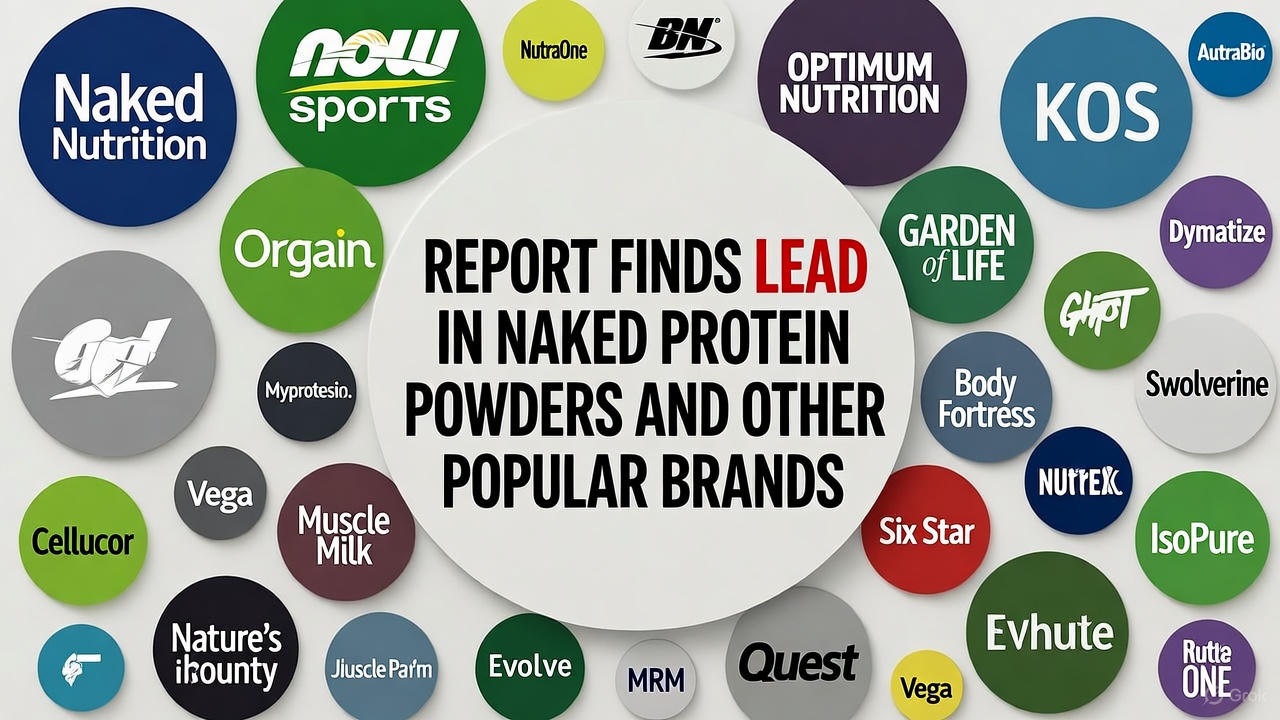
Recent lab tests conducted by the nonprofit Clean Label Project show that 47 percent of 160 tested protein powder products from 70 leading brands exceeded California’s Proposition 65 safety thresholds for heavy metals such as lead and cadmium. Verywell Health+3Axios+3Clean Label Project+3
The study flagged that plant-based and organic powders—ironically often marketed as “healthier”—tended to have higher contamination levels. For example, “organic products, on average, showed three times more lead and twice the amount of cadmium” than comparable non-organic powders. Clean Label Project+2Clean Label Project+2 Chocolate-flavored varieties were singled out as especially risky: they often contained up to four times more lead than vanilla versions. Verywell Health+3Clean Label Project+3Martha Stewart+3
Although the report did not name every brand tested, it separately mentions that one of the worst offenders was Naked Nutrition’s Vegan Mass Gainer. Food & Wine In media coverage, other “popular” supplements have also been linked to elevated heavy metals. Food & Wine+2EatingWell+2
Reactions & Quotes
From Clean Label Project, the lead authors emphasize consumer risk:
“This study serves as a wake-up call for consumers, manufacturers, retailers, and regulators alike,” the report states, urging heightened transparency and safety standards. Axios+2Clean Label Project+2
Public health experts caution that no level of lead exposure is entirely safe. Trace lead particularly threatens children, pregnant women, and individuals with long-term exposure. Axios+2texashealth.org+2
“Heavy metals may enter protein powders through soil, water, or packaging materials,” says Dr. Kelly Johnson-Arbor, a toxicologist, noting that “chocolate tends to accumulate more cadmium, which may explain why flavored powders are riskier.” Verywell Health+2texashealth.org+2
On the industry side, the Council for Responsible Nutrition (CRN) has pushed back, arguing that exceeding a Proposition 65 threshold doesn’t automatically mean a health hazard under everyday use, and calling for more contextual data. EatingWell
What Is Confirmed — and What Remains Alleged
-
Confirmed: Nearly half of the tested powders exceeded at least one metric of regulatory heavy-metal limits. Verywell Health+3Axios+3Clean Label Project+3
-
Alleged (or not fully documented): The direct health effects of long-term consumption have not been proven for each impacted brand. The report stops short of declaring that any specific powder has caused poisoning.
-
Unclear: Which local products sold or imported into Bangladesh are affected remains unknown. The lab tests were mostly on U.S. and international brands.
Local Implications & Next Steps
Consumers in Bangladesh who use imported protein powders—especially “organic,” plant-based, or chocolate-flavored ones—may now question safety. Retailers and importers may be pressed to demand lab declarations or pull high-risk products.
Regulatory authorities (such as the Directorate General of Drug Administration or food safety agencies) may feel pressure to initiate independent testing, issue consumer advisories, or require third-party certification (e.g. NSF, USP) before supplements reach shelves.
In the longer term, the industry might adopt stricter sourcing and purification controls, while consumers might shift toward whole food protein sources (eggs, legumes, lean meats) or lower-risk supplements.


Comments
No comments yet. Be the first to comment!